When it comes to drilling, the choice of the right tool is crucial for achieving efficient and high – quality results. As a button bit supplier deeply entrenched in the drilling industry, I often encounter various inquiries from customers about the suitability of button bits for different materials. One question that has piqued my interest recently is: Can a button bit be used for drilling in rubber? In this blog post, I will delve into this topic, exploring the technical aspects, potential challenges, and possible applications. Button Bit
Understanding Button Bits
Before we discuss their use with rubber, let’s first understand what button bits are. Button bits are a type of drill bit commonly used in rock drilling, mining, and construction. They are characterized by their tungsten carbide buttons, which are the cutting elements attached to the bit’s face. These buttons are designed to withstand high – pressure and high – temperature conditions, providing excellent wear resistance and durability when drilling through hard materials like granite, limestone, and other rocks.
The design and function of button bits are optimized for hard – rock penetration. The shape, size, and arrangement of the tungsten carbide buttons are engineered to break the rock by chipping and fracturing it. The high hardness of tungsten carbide allows the bit to maintain its cutting edge even under the harsh conditions of rock drilling.
Properties of Rubber
Rubber is a unique material with distinct properties that set it apart from rocks and other hard substances. It is an elastic polymer, which means it can deform under stress and return to its original shape when the stress is removed. Rubber has a relatively low hardness compared to rocks, and it is also highly flexible and has good shock – absorbing capabilities.
These properties make rubber a challenging material to drill. Unlike rocks, which break and fracture under the impact of a drill bit, rubber tends to deform and stretch. This can lead to issues such as the bit getting stuck, the rubber material clogging the bit, or the formation of rough and uneven holes.
Can a Button Bit be Used for Drilling in Rubber?
The short answer is yes, but with significant caveats. Button bits are primarily designed for hard – rock drilling, and using them for rubber presents several challenges.
Advantages of Using a Button Bit for Rubber Drilling
- Cutting Ability: The sharp tungsten carbide buttons on a button bit can, in theory, cut through rubber. The high hardness of the carbide allows it to penetrate the rubber material, especially if the rubber is of a relatively soft grade.
- Durability: Button bits are built to last. Even when drilling a softer material like rubber, the tungsten carbide buttons will not wear out as quickly as some other types of drill bits. This means that the bit can be used for multiple drilling operations without significant degradation of the cutting edge.
Challenges of Using a Button Bit for Rubber Drilling
- Heat Generation: During the drilling process, friction between the bit and the rubber generates heat. Since rubber is a poor conductor of heat, this heat can build up quickly, causing the rubber to melt or deform. If the heat is not dissipated properly, it can also damage the tungsten carbide buttons on the bit.
- Clogging: Rubber is a sticky material, and as it is cut by the button bit, it can adhere to the buttons and the flutes of the bit. This clogging reduces the efficiency of the bit, making it difficult to drill further and potentially causing the bit to overheat.
- Hole Quality: Achieving a clean and precise hole in rubber with a button bit can be challenging. The elastic nature of rubber can cause the hole to close up slightly after the bit has passed through, resulting in an uneven or smaller – than – desired hole diameter. Additionally, the rough – cutting action of the button bit may leave a ragged edge around the hole.
Possible Applications and Adaptations
Despite the challenges, there are some scenarios where using a button bit for rubber drilling can be considered.
- Industrial Applications: In some industrial settings, large – scale rubber components may need to be drilled. For example, in the manufacturing of rubber gaskets or seals, a button bit might be used if a durable and relatively fast – cutting tool is required. However, in such cases, certain adaptations need to be made.
- Cooling and Lubrication: To mitigate the heat generation and clogging issues, the use of cooling and lubrication is essential. A water – based lubricant can be applied during the drilling process to reduce friction, dissipate heat, and prevent the rubber from sticking to the bit.
- Speed and Feed Rate: The drilling speed and feed rate should be carefully adjusted. A slower speed and a lighter feed pressure can help to reduce heat generation and prevent the rubber from deforming too much during the drilling process.
Case Studies (Hypothetical but Based on Industry Knowledge)
Let’s consider a hypothetical scenario in an automotive manufacturing plant. The plant produces rubber bushings that need to be drilled with holes of a specific diameter. The initial attempt using a standard twist drill bit proved inefficient due to the high wear rate and the poor hole quality.
The plant decided to experiment with a button bit. By following the recommended practices of using a water – based lubricant and adjusting the drilling speed and feed rate, they were able to achieve satisfactory results. The button bit lasted longer than the twist drill bit, and although the hole quality was not perfect, it met the minimum requirements for the application.
Other Options for Rubber Drilling
While a button bit can be used for rubber drilling in certain situations, there are other types of drill bits that are more commonly used for this material.
- Spade Bits: Spade bits have a flat, paddle – shaped cutting edge. They are relatively inexpensive and can be used to drill large – diameter holes in rubber. The flat cutting edge allows for a smooth and relatively clean cut through the rubber.
- Forstner Bits: Forstner bits are designed to drill flat – bottomed holes. They are often used in woodworking but can also be used for rubber drilling. They provide a very precise and clean hole, making them suitable for applications where hole quality is of the utmost importance.
Conclusion

In conclusion, a button bit can be used for drilling in rubber, but it is not without its challenges. The unique properties of rubber, such as its elasticity and low heat conductivity, make it a difficult material to drill with a tool that is primarily designed for hard – rock applications. However, with the right adaptations, such as cooling and lubrication and careful adjustment of drilling parameters, it is possible to achieve satisfactory results in certain industrial applications.
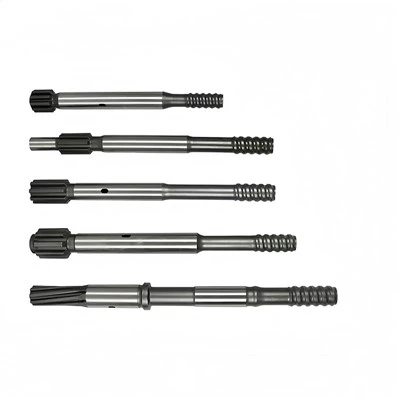
Drill Rod If you are considering using button bits for rubber drilling or are looking for other drilling solutions, I am here to assist you. As a button bit supplier, I have a wealth of experience and knowledge in the field of drilling tools. I can provide you with detailed product information, technical support, and guidance on the best practices for your specific drilling needs. Whether you are in the mining, construction, or manufacturing industry, I am confident that I can help you find the most suitable drilling solution. Do not hesitate to reach out to me for a consultation and to discuss your procurement requirements.
References
- "Drilling Engineering Handbook" by William C. Lyons and Gary J. Plisga
- "Rubber Technology Handbook" by Werner Hofmann
Super Rock Machinery Equipment (Qingdao) Co., Ltd.
We are one of the most professional button bit manufacturers and suppliers in China, featured by quality products and good price. Please feel free to buy advanced button bit for sale here from our factory. Welcome to view our website for more information.
Address: No. 45, Pengwan Road, Qianwan Bonded Port Area, Qingdao Sub-district, Free Trade Pilot Zone, Shandong China
E-mail: sales@superrocktools.com
WebSite: https://www.superrocktools.com/
