If you’ve spent any time in manufacturing—especially metal stamping—you’ve probably heard people throw around phrases like “stamping robot” and “traditional stamping machine” like they’re interchangeable. Spoiler: they’re not. As someone who’s been selling stamping robots for the last 8 years, I’ve sat across from dozens of shop owners who come in thinking “a machine’s a machine,” and leave going, “Oh wow, that’s a whole different ballgame.” Today, I’m breaking down the real differences, no jargon, no sales fluff—just the stuff that matters if you’re trying to decide what’s worth your time and budget. Stamping Robot
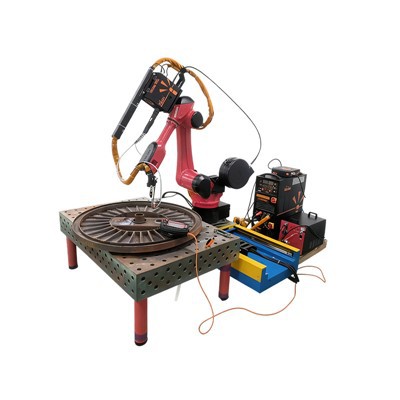
First, let’s start with the basics, no tech textbook stuff. Traditional stamping machines are the workhorses of factories for decades. Think of them as a dedicated athlete—they do one thing, really well, and that’s it. You’ve got mechanical presses, hydraulic presses, all of them. For example, if you need to stamp a 2-inch steel bracket for car doors, you load a metal sheet into the machine, it slams down once, cuts the shape, done. The machine itself is the star; it has no “brain” outside of its basic settings: how hard to press, how fast, when to cycle. A lot of older factories still run these because they’re cheap upfront, and if you only make one part, they don’t need anything more. But here’s the catch with traditional machines: they’re not flexible. If your customer comes in a year later and asks for a slightly different bracket—say, a 2.5-inch one with a notch on the side—you either have to replace the entire die (which can cost $10,000+ and take weeks to ship) or run the part by hand, which is slow and risky. Also, you’re stuck with manual labor for loading and unloading, right? A person stands in front of the machine, grabs a sheet, slaps it in, waits for it to stamp, pulls it out. That’s repetitive, tiring, and not exactly safe—my cousin’s friend lost a finger at a traditional press because they got distracted after 10 hours of the same motion.
Now, stamping robots. These aren’t just machines—they’re robots paired with a press, basically. The robot’s whole job is handling the parts, and it’s got a brain (a controller) that remembers everything. Unlike a traditional machine that only holds a handful of settings, a stamping robot can be programmed to do multiple tasks. Let’s say you need three different parts: that 2-inch bracket, a small clip, and a gasket. You don’t need to buy three separate machines or even three new dies. You just change the program on the robot, swap the die (which takes 10 minutes, not weeks), and you’re back to running parts. Flexibility is the big one here. A lot of people think robots are super expensive, but when you factor in the cost of changing dies, downtime, and labor mistakes, they actually pay for themselves faster than you’d think. Plus, no more manual loading— the robot picks up sheets, feeds them to the press, takes the finished part, even stacks them for packaging. That removes most of the safety risks, and you don’t have to pay someone overtime to stand there all day.
Wait, let’s talk about precision because that’s a huge point people miss. Traditional stamping machines are good, but they have a margin of error—usually around 0.5 to 1 millimeter. For simple parts, that’s fine. But if you’re making medical devices, aerospace parts, or electronics, that gap can make the part useless. A stamping robot, though, has a repeatability rate of like 0.02 millimeters. That’s tiny—way smaller than a grain of sand. Let me give you an example: last year, a customer was making tiny battery tabs for electric cars. With their old traditional machine, they were throwing out 8% of parts because the tabs were slightly off-size. That cost them $15,000 a month in scrap. We installed a stamping robot, and that scrap rate dropped to less than 0.5%. Suddenly, their bottom line got way better, and they could take on more orders because they didn’t have to fix bad parts. Traditional machines can’t hold that kind of consistency, especially after they’ve run for a few thousand cycles. Hydraulic presses wear out faster than you’d think, and the alignment gets off. Robots, though, they’re calibrated once, and they stay consistent for tens of thousands of cycles.
Then there’s speed. Don’t get me wrong, a traditional stamping machine is fast—if you’re running one part. But if you’re switching between parts, it’s slow. Also, manual loading means a human can only load so fast. A robot? It doesn’t get tired, it doesn’t need breaks. It can cycle 24/7. Let’s do the math: a traditional machine with a human operator might do 1,000 parts an hour. A stamping robot can do 1,800, no problem. And that’s not even counting the time you lose when you have to change dies or fix a human’s mistake (like dropping a part, or misaligning it, which jams the machine). Jams with traditional machines are a big deal—they can take hours to unjam, cost you production time, maybe damage the die. Robots don’t drop parts as much, and their controllers have built-in sensors that stop them if something’s off, so jams are way less common.
Of course, I can’t just sugarcoat this—there are tradeoffs. Traditional machines are way cheaper to buy upfront. A used mechanical press might cost $5,000, while a stamping robot system (the robot arm, controller, and integration with the press) starts around $50,000. That’s a huge difference for a small shop. Also, you need someone to program the robot—you can’t just plug it in and run it, like you can a traditional machine. But here’s the thing: most of our customers find that even with the higher upfront cost, they make their money back in 18 to 24 months. How? Less scrap, no overtime pay, less downtime, being able to take on more orders without hiring more workers. For a small shop that’s growing, that’s a no-brainer. For a shop that only runs one product 24/7, a traditional machine might still make sense. But 9 times out of 10, if you’re looking to expand, or your customer base changes often, the robot is the better long-term play.
Another big difference is space. Wait, a lot of people don’t think about this. Traditional stamping machines are big, but they’re pretty compact—they’re just the press. A stamping robot needs room for the arm to move, right? You can’t just stick a robot next to a traditional press; you need to set up a safety perimeter (usually a fence or light curtain) around the robot’s work area. So if you’ve got a small factory floor, that’s something to consider. But again, if you’re maximizing your space, a robot can often feed multiple presses at once. So instead of having one press with one human, you have one robot feeding two or three presses. That saves space and labor. It’s like having one worker do the job of three. I’ve had customers go from 10 people on the floor to 5, because the robot handles all the loading and unloading. That cuts labor costs in half, which is massive.
Let’s also talk about maintenance. Traditional machines require a lot of upkeep. You have to oil them every day, replace parts every few thousand cycles, inspect the dies weekly. Robots? They need less regular maintenance. You check the arm’s joints every month, calibrate it once a quarter, and that’s it. No daily oiling, no inspecting moving parts every shift. That’s less downtime and less maintenance cost. Of course, if a robot does break, it’s a bit more complicated to fix, but most reputable stamping robot suppliers (hint: that’s us) offer service plans and 24/7 support. I’ve had customers call at 2 a.m. with a robot issue, and we’ve got a technician on site by 7 a.m. Traditional machine breakdowns are often faster to fix, but they happen more often. So it’s a tradeoff: fewer breakdowns, but more complex when they do happen.
Wait, let’s get real about the human element too. I know a lot of factory workers worry that robots will take their jobs. But from what I’ve seen, that’s not what’s happening. When a shop switches to a stamping robot, they usually reassign workers to do more skilled jobs: programming the robot, quality control, maintaining the dies. Those are higher-paying jobs, and the workers get training. For example, a shop in Detroit I worked with a couple years ago had 12 workers, all doing manual stamping. They installed two stamping robots, and retrained 10 of them to work with the robots, doing programming and quality checks. Only two left, and those were people who didn’t want to learn new skills. So it’s not about replacing workers—it’s about upgrading the jobs, making them safer and more rewarding. Traditional stamping is grueling, repetitive work that can lead to injuries over time. Robots take that part, so workers can do more meaningful stuff.
Let me wrap this up with a quick comparison, so it’s easy to remember. Traditional stamping machine: low upfront cost, fixed flexibility, higher scrap rate, more labor, more downtime, higher safety risk, more maintenance. Stamping robot: higher upfront cost, total flexibility, lower scrap rate, less labor, less downtime, safer, less regular maintenance. Which one is right for you? If you’re a small shop running one product for the next 10 years, a traditional machine works. But if you’re looking to grow, take on more orders, cut costs long-term, and make parts that need precision, a stamping robot is worth every penny.
Here’s the thing: I don’t push robots on every customer. If a customer’s only making one part, and they don’t plan to expand, I’ll tell them to go with a traditional machine. But most of the time, when a shop owner comes to me saying they’re tired of scrap, tired of overtime, tired of missing deadlines because a jam shut down their line, a stamping robot is the answer. We’ve helped hundreds of shops cut their production costs by 30% or more, and increase their output by double.
If you’re curious to learn more—whether you’re a small shop owner wondering if a robot fits your budget, or a larger facility looking to upgrade your line—reach out. We don’t do pushy sales pitches; we just give you the straight talk, no fluff. Whether you’re making brackets, battery tabs, automotive parts, or anything else that needs stamping, we can walk you through what would work best for your business.
Spray Painting Robot References:
- Manufacturing Extension Partnership. (2022). Robotics in Metal Stamping: Cost-Benefit Analysis for Small to Medium Enterprises.
- Society of Manufacturing Engineers. (2023). Precision and Efficiency Differences Between Mechanical Presses and Industrial Robotic Stamping Systems.
- National Institute for Occupational Safety and Health. (2021). Occupational Safety Risks in Manual vs. Automated Stamping Operations.
- Stamping Robot Industry Association. (2024). Flexibility and Scalability in Robotic Stamping Solutions for Evolving Production Needs.
Dongguan Chuanglida Intelligent Equipments Co., Ltd.
As one of the most professional stamping robot manufacturers and suppliers in China, we also support customized service. Please feel free to buy discount stamping robot in stock here from our factory. For price consultation, contact us.
Address: Room 201, Building 2, No. 61, Shachang 1st Road, Dalang Town, Dongguan City, Guangdong Province
E-mail: haoguangli001@outlook.com
WebSite: https://www.boruntestech.com/
