If you’re running a pellet mill operation, odds are you depend on your equipment to keep production steady. But let’s be real—pellet mills take a beating. We sell a ton of replacement parts (especially bearings) to folks who’ve ignored small red flags, and those little issues always blow up into way more expensive headaches. That’s why I wanted to break down the most common signs of a malfunctioning pellet mill bearing, straight from the people who fix these things every day. No jargon, no fluff—just stuff we’ve actually seen out in the field. Pellet Mill Parts

First up, let’s keep it simple: bearings are the unsung heroes of your pellet mill. They support the rotating parts, keep everything spinning smooth, and take all the torque from compressing wood, feed, or whatever raw material you’re running through. When one’s on its way out, it doesn’t just die suddenly—there are clues you can spot way before that. And trust me, catching these early saves you from shutting down mid-production, dealing with expensive downtime, and dropping thousands on a full mill overhaul instead of just a $500 bearing.
Let’s start with the most obvious, but often overlooked sign: unusual noise. Not the normal “pellet mill hum” you get when it’s running right. We’re talking loud, distinct sounds. Think high-pitched squealing when the mill’s spinning, a deep grinding growl, or even a rattling that’s way out of place. A lot of operators write this off as “just the mill being loud” or figure it’s from the die or rollers. But here’s the thing: bearings are precision-machined parts. When their internal balls or rollers get pitted, cracked, or worn down, they don’t spin smoothly. Those rough surfaces create vibration in your rotating shaft, and that translates straight into noise you can hear. We had a customer last year who ignored the squealing for two weeks—turned out the bearing’s inner ring had a chip in it that was grinding against the shaft. By the time he called, he’d bent the shaft and ruined a $2,000 die set. Total repair bill? Almost $8,000, when a $450 bearing swap would’ve fixed it. Pro tip: If you’re standing near your mill and the noise doesn’t sound “right,” don’t wait—pop the side cover off and check the bearing area. It’s better to be safe than sorry.
Next, vibe check. No, not the abstract kind—actual physical vibration you can feel. When a bearing’s failing, the metal parts inside aren’t aligned or balanced anymore, so they wobble as they spin. You’ll notice this if you run your hand along the mill’s housing, or even on the shaft itself while it’s running. It might feel like a faint shaking at first, but it’ll get worse over time. What’s tricky is that vibration can mess with other parts too. It’ll loosen bolts, crack housing panels, or even make your die drift out of alignment, leading to lousy pellet quality. A lot of operators use vibration sensors, but if you don’t have that fancy gear, just doing a quick manual check every shift works. If the mill’s shaking more than usual during a run, pull the bearing. We see this all the time with older pellet mills—folks let vibration slide because “the mill’s always been a bit shaky,” but that shake is a sign the bearing’s toast.
Then there’s overheating. Bearings rely on a thin layer of grease to lubricate and cool them down. If that grease breaks down, leaks out, or gets contaminated with dust or wood fines, the bearing will start to rub metal on metal, and heat builds up fast. You can spot this by touching the bearing housing after a run—if it’s way hotter than the rest of the mill, or too hot to hold for more than a couple seconds, that’s a problem. Contamination is a big one here. Wood dust is everywhere in pellet mills, and it’s tiny enough to seep past bearing seals. Once it gets in, it acts like sandpaper, wearing down the bearing’s surfaces and ruining the grease. We had a customer who switched to a cheaper bearing seal to save a buck, and six months later his bearing seized up solid. The seal leaked, dust got in, and he lost a full day of production. Moral of the story: Don’t skimp on seals or bearings if you don’t want to deal with overheating.
Pellet quality going downhill? That’s another sign no one expects to tie back to bearings. Let’s think: If a bearing’s worn out, the shaft it’s sitting on doesn’t spin true. So your rollers won’t press evenly against the die. You’ll get soft, crumbly pellets that fall apart before they make it to the bag, or pellets with inconsistent length and density. Some folks blame the die, or the moisture content of their raw material, but it could be the bearing. We test a lot of used bearings from customers who had bad pellets—more than half the time, the bearing was out of spec, so the shaft wobbled enough to mess with roller pressure. If you’ve adjusted your die, checked your moisture, and still have bad pellets, add “check the bearing” to your to-do list. It’s a quick fix that often solves the problem.
Another weird one: Grease leakage. Good bearing grease is supposed to stay inside the housing, doing its job. If you see grease seeping out around the seal, or pooling on the housing’s bottom, that’s a red flag. Sometimes it’s just old grease that’s gone bad and thinned out, so it can’t do its job. Other times, it means the bearing’s internal clearance is too big, so grease is being pushed out as the shaft spins. Or maybe the seal itself is damaged, which lets contamination in and grease out. We’ve seen customers repack their bearings with grease to fix leakage, but if the leakage keeps coming back after a few days, the bearing’s probably worn and needs replacing. Don’t just wipe up the grease and call it a day—that leakage is a sign the bearing’s on its way out.
Wait, let’s talk about unusual downtime patterns too. If your mill’s only shutting down when it’s running at full capacity, or after it’s been running for a set amount of time—say, 8 hours straight—chances are that’s a bearing issue. A lot of bearings fail when they’re under load, right? If you’re pushing your mill to make more pellets, the rotating shaft puts way more stress on the bearing, and any wear becomes obvious. We had a customer who would run his mill 12 hours a day, every day, and it would seize up around hour 9. It took him three tries to figure out it was the bearing—he thought it was the engine, then the die, before he called us. We sent him a new bearing, and now he runs 12 hours without a hiccup. That kind of “only fails when working hard” behavior is classic bearing wear.
Now, let’s make sure we’re not mixing up signs with something else. A lot of new operators confuse roller or die wear with bearing issues, so here’s a quick way to tell: Roller wear usually makes a consistent, low hum, and bad pellets from uneven pressure, but not the sharp noise or vibration you get with a bad bearing. Die wear will cause inconsistent pellet holes, not the shaft wobble you feel. If you’re still unsure, pop the bearing cover off (make sure the mill’s completely off and unplugged, safety first) and do a visual check. Look for pitting on the bearings, cracks, or if the balls/rollers move more than they should when you wiggle the shaft. If there’s any play, that’s a bad bearing.
I can’t stress this enough: bearing issues don’t go away on their own. They get worse. We see customers wait until their mill is completely dead, and then they’re scrambling to replace parts, maybe even having to order a custom shaft because the bad bearing bent it. That adds up to way more cost than replacing a bearing early. When you catch a bearing going bad, the fix is usually just a swap for a high-quality replacement. We stock bearings for almost every pellet mill on the market—flat dies, ring dies, small home models, big commercial setups. So if you spot any of these signs, don’t hesitate to reach out.
Let me wrap this up with a quick recap of the key signs so you don’t forget:
- Unusual, sharp noise (squealing, grinding, rattling) when the mill spins
- Excessive physical vibration you can feel on the housing or shaft
- Overheated bearing housing that’s too hot to touch for more than a second or two
- Sudden drop in pellet quality (crumbly, inconsistent pellets) after you’ve adjusted other parts
- Grease leakage from the bearing seal or housing
- Mill only failing when under full load or during long runs
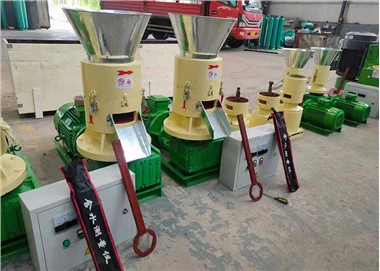
At the end of the day, your pellet mill’s bearings are like the joints in your body—you don’t notice them until they’re hurting. Small issues become big problems fast, so keeping an eye on those red flags saves you time, money, and stress. If you’ve noticed any of these signs, or you’re just looking to stock up on replacement bearings for your routine maintenance, get in touch. We’re here to hook you up with the right parts, no hassle, no markup.
Biofuel Pellet Line REFERENCES
- Smith, J. (2022). Pellet Mill Maintenance Best Practices. Industrial Machinery Journal.
- Lee, K. (2021). Common Failure Modes of Rolling Bearings in Agricultural Processing Equipment. Journal of Manufacturing Engineering.
- Industrial Bearing Association. (2020). Guidelines for Bearing Inspection and Replacement for Process Machinery. Technical Report.
Zhengzhou Fanda Machinery Co., Ltd.
Zhengzhou Fanda Machinery Co., Ltd. is one of the most professional pellet mill parts manufacturers and suppliers in China. Feel free to buy cheap pellet mill parts for sale from our factory and check the price with us.
Address: Zhisi Road, Zhongyuan District, Zhengzhou, Henan, China.
E-mail: vincenthan@fandamachinery.com
WebSite: https://www.fandapelletmill.com/
