As a seasoned provider in the industrial robot sector, I’ve had the privilege of witnessing firsthand the transformative power of these mechanical marvels. Industrial robots have revolutionized manufacturing and various industries, enhancing efficiency, precision, and productivity. In this blog, I’ll delve into the inner workings of industrial robots, exploring their components, programming, and applications. Industrial Robots
The Anatomy of Industrial Robots
To understand how industrial robots work, it’s essential to familiarize ourselves with their basic components. These components work in harmony to enable the robot to perform a wide range of tasks with precision and efficiency.
Mechanical Structure
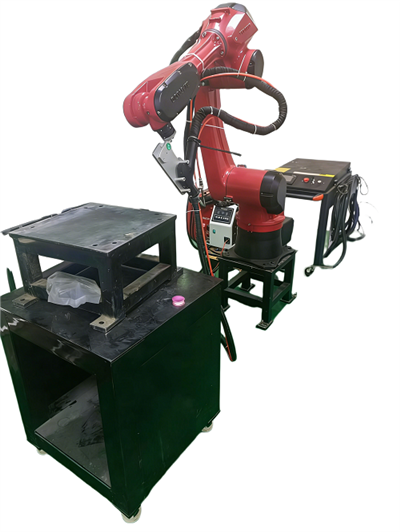
At the heart of every industrial robot lies its mechanical structure, which provides the framework for its movement. The most common type of industrial robot is the articulated robot, which consists of a series of connected joints and links, resembling the human arm. These joints allow the robot to move in multiple directions, providing a high degree of flexibility and reach.
Another type of industrial robot is the Cartesian robot, which moves along three linear axes (X, Y, and Z). Cartesian robots are known for their simplicity and accuracy, making them ideal for applications that require precise linear movements, such as pick-and-place operations.
SCARA (Selective Compliance Assembly Robot Arm) robots are designed to perform tasks in a horizontal plane with high speed and accuracy. They are commonly used in assembly operations, where they can quickly pick and place components with precision.
Actuators
Actuators are the devices that convert electrical, hydraulic, or pneumatic energy into mechanical motion. In industrial robots, electric motors are the most commonly used actuators due to their high efficiency, precise control, and low maintenance requirements.
Servo motors are a type of electric motor commonly used in industrial robots. They are capable of precise control over position, speed, and torque, allowing the robot to perform complex tasks with high accuracy. Servo motors are often paired with encoders, which provide feedback on the motor’s position, enabling the robot’s control system to adjust the motor’s output as needed.
Sensors
Sensors play a crucial role in the operation of industrial robots, allowing them to interact with their environment and perform tasks with precision. There are several types of sensors used in industrial robots, including:
- Vision sensors: These sensors use cameras and image processing algorithms to provide the robot with visual information about its surroundings. Vision sensors can be used for tasks such as object recognition, inspection, and guidance.
- Force sensors: Force sensors measure the amount of force applied by the robot’s end effector, allowing it to perform tasks that require a delicate touch, such as assembly or painting.
- Proximity sensors: Proximity sensors detect the presence of objects in the robot’s vicinity, enabling it to avoid collisions and operate safely in dynamic environments.
- Position sensors: Position sensors provide feedback on the position of the robot’s joints and links, allowing the control system to accurately control the robot’s movement.
End Effectors
End effectors are the tools or devices attached to the robot’s wrist, which are used to perform specific tasks. The type of end effector used depends on the application and the task to be performed. Some common types of end effectors include:
- Grippers: Grippers are used to grasp and hold objects. They can be designed to handle a variety of objects, from small components to large workpieces.
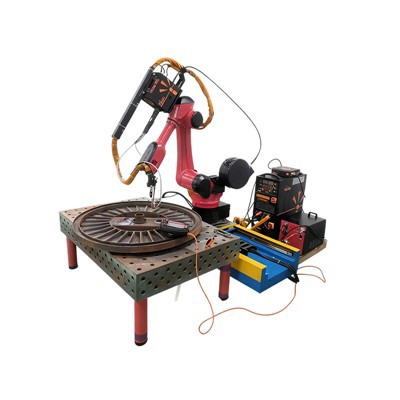
- Welding torches: Welding torches are used for welding operations, such as arc welding or spot welding. They are designed to deliver the necessary heat and energy to join two or more pieces of metal together.
- Paint spray guns: Paint spray guns are used for painting operations, such as automotive painting or furniture finishing. They are designed to apply a consistent and uniform coat of paint to the surface of the object.
- Vacuum cups: Vacuum cups are used to pick and place objects by creating a vacuum between the cup and the object. They are commonly used in applications where a gentle touch is required, such as handling fragile glass or electronic components.
Programming Industrial Robots
Once the industrial robot is assembled and equipped with the necessary sensors and end effectors, it needs to be programmed to perform specific tasks. There are several programming methods available for industrial robots, each with its own advantages and disadvantages.
Teach Pendant Programming
Teach pendant programming is one of the most common methods used to program industrial robots. With this method, the operator uses a handheld device called a teach pendant to manually move the robot through a series of positions and record them in the robot’s control system. The operator can then specify the speed, acceleration, and other parameters for each movement, creating a program that the robot can execute repeatedly.
Teach pendant programming is relatively easy to learn and is ideal for small-scale applications or applications that require frequent program changes. However, it can be time-consuming and requires a skilled operator to ensure accurate and efficient programming.
Offline Programming
Offline programming involves creating a robot program using a computer software simulation before the program is downloaded to the actual robot. This method allows the programmer to design and test the program in a virtual environment, reducing the time and cost associated with programming and commissioning the robot.
Offline programming is particularly useful for large-scale applications or applications that require complex path planning. It also allows the programmer to simulate different scenarios and optimize the program for maximum efficiency. However, it requires specialized software and a good understanding of robotics and programming concepts.
Vision Programming
Vision programming involves using vision sensors to provide the robot with visual information about its environment. This information can be used to guide the robot’s movement, perform object recognition, and inspect the quality of the workpieces.
Vision programming is becoming increasingly popular in industrial applications, as it allows the robot to adapt to changing conditions and perform tasks with greater accuracy and flexibility. However, it requires specialized software and hardware, as well as a good understanding of computer vision and image processing concepts.
Applications of Industrial Robots
Industrial robots are used in a wide range of applications across various industries, including manufacturing, automotive, electronics, food and beverage, and pharmaceuticals. Some common applications of industrial robots include:
Assembly
Industrial robots are widely used in assembly operations, where they can quickly and accurately assemble components into finished products. Robots can be programmed to perform tasks such as inserting parts, tightening screws, and applying adhesives, improving the quality and efficiency of the assembly process.
Welding
Welding is another common application of industrial robots. Robots can be programmed to perform various welding processes, such as arc welding, spot welding, and laser welding, with high precision and consistency. This improves the quality of the welds and reduces the risk of human error.
Painting
Industrial robots are also used in painting operations, where they can apply a consistent and uniform coat of paint to the surface of the object. Robots can be programmed to follow a specific path and adjust the spray pattern and intensity based on the shape and size of the object, resulting in a high-quality finish.
Material Handling
Material handling is one of the most common applications of industrial robots. Robots can be used to pick and place objects, load and unload materials from machines, and transport materials between different workstations. This improves the efficiency of the material handling process and reduces the risk of injuries to human workers.
Inspection
Industrial robots are also used in inspection operations, where they can use vision sensors and other sensors to inspect the quality of the workpieces. Robots can be programmed to detect defects, measure dimensions, and verify the presence of components, ensuring that the products meet the required quality standards.
Conclusion
Industrial robots have come a long way since their inception, and they continue to play an increasingly important role in modern manufacturing and various industries. By understanding how industrial robots work, their components, programming, and applications, businesses can make informed decisions about how to incorporate these mechanical marvels into their operations to improve efficiency, precision, and productivity.
Delta Robot If you’re interested in learning more about industrial robots or exploring how they can benefit your business, I encourage you to reach out to me. I’d be happy to discuss your specific needs and provide you with more information about the industrial robots we offer. Let’s work together to take your business to the next level with the power of industrial robots.
References
- Groover, M. P. (2016). Fundamentals of Modern Manufacturing: Materials, Processes, and Systems. Wiley.
- Siciliano, B., & Khatib, O. (Eds.). (2016). Springer Handbook of Robotics. Springer.
- Spong, M. W., Hutchinson, S., & Vidyasagar, M. (2006). Robot Modeling and Control. Wiley.
Dongguan Chuanglida Intelligent Equipments Co., Ltd.
As one of the most professional industrial robots manufacturers and suppliers in China, we also support customized service. Please feel free to buy discount industrial robots in stock here from our factory. For price consultation, contact us.
Address: Room 201, Building 2, No. 61, Shachang 1st Road, Dalang Town, Dongguan City, Guangdong Province
E-mail: haoguangli001@outlook.com
WebSite: https://www.boruntestech.com/
