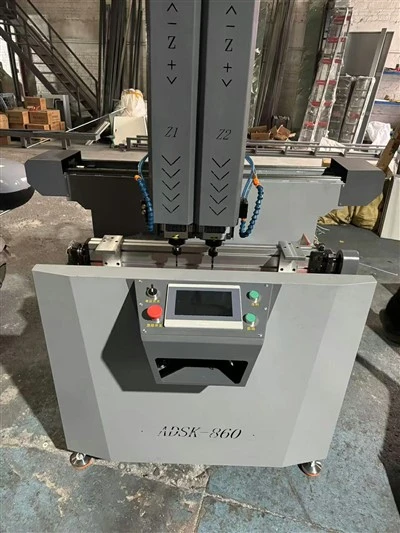
As a supplier of CNC milling machines, I’ve witnessed firsthand the rapid evolution of manufacturing technologies. In recent years, two technologies have stood out for their transformative potential: 3D printing and CNC milling. While they are often seen as competing technologies, they can actually complement each other in powerful ways, offering manufacturers a more comprehensive and efficient production solution. In this blog post, I’ll explore how 3D printing and CNC milling machines can work together to create synergies that benefit businesses of all sizes. CNC Milling Machine
Understanding the Basics: 3D Printing and CNC Milling
Before delving into how these two technologies can complement each other, it’s essential to understand the fundamentals of each.
3D Printing
3D printing, also known as additive manufacturing, is a process of creating three-dimensional objects by layering materials based on a digital model. This technology allows for the creation of complex geometries that would be difficult or impossible to achieve using traditional manufacturing methods. 3D printing is highly versatile and can use a wide range of materials, including plastics, metals, ceramics, and composites. It’s ideal for rapid prototyping, custom manufacturing, and small-batch production, as it significantly reduces the time and cost associated with tooling and setup.
CNC Milling
CNC (Computer Numerical Control) milling is a subtractive manufacturing process that uses computerized controls to operate milling machines. These machines remove material from a workpiece to create a desired shape. CNC milling is known for its high precision, accuracy, and ability to work with a variety of materials, including metals, plastics, and wood. It’s suitable for both large-scale production and the manufacture of high-precision parts, as it can achieve tight tolerances and smooth surface finishes.
Complementary Advantages
Prototyping and Design Validation
One of the most significant advantages of 3D printing is its ability to quickly produce prototypes. Designers can create a digital model and print a physical prototype within hours or days, allowing for rapid iteration and design validation. However, 3D printed prototypes may not always have the mechanical properties or surface finish required for functional testing. This is where CNC milling comes in.
After validating the design with a 3D printed prototype, a CNC milling machine can be used to produce a more accurate and functional prototype. The CNC-milled prototype will have the same material properties as the final product, allowing for more realistic testing and analysis. This combination of 3D printing for rapid prototyping and CNC milling for functional prototyping can significantly reduce the time and cost of the product development cycle.
Complex Geometries and Finishing Touches
3D printing excels at creating complex geometries with intricate details that would be challenging or impossible to achieve with CNC milling alone. For example, lattice structures, organic shapes, and internal channels can be easily printed using 3D technology. However, 3D printed parts may have a rough surface finish and require post-processing to meet the desired specifications.
CNC milling can be used to provide the finishing touches to 3D printed parts. It can mill flat surfaces, drill holes, and create smooth finishes, improving the overall quality and functionality of the part. This combination of 3D printing for complex geometries and CNC milling for finishing operations allows manufacturers to create parts that are both highly detailed and of high quality.
Material Selection and Production Scale
3D printing offers a wide range of material options, but some materials may not be suitable for all applications. For example, while 3D printed plastics can be used for many prototyping and low-stress applications, they may not have the strength and durability required for high-performance parts. CNC milling machines, on the other hand, can work with a variety of materials, including metals, which are often preferred for their mechanical properties.
For small-batch production or custom parts, 3D printing can be a cost-effective solution. However, as the production volume increases, CNC milling becomes more efficient and cost-effective. Manufacturers can use 3D printing for the initial production runs or custom components and then switch to CNC milling for large-scale production. This hybrid approach allows businesses to take advantage of the strengths of both technologies and optimize their production processes.
Case Studies
Automotive Industry
In the automotive industry, the combination of 3D printing and CNC milling is being used to create custom parts and components. For example, a car manufacturer may use 3D printing to create a prototype of a new engine component. The 3D printed prototype allows the design team to quickly test and refine the design. Once the design is finalized, a CNC milling machine can be used to produce the final part from aluminum or other high-strength materials. This approach not only reduces the time to market but also improves the quality and performance of the parts.
Aerospace Industry
The aerospace industry demands high precision and reliability in its components. 3D printing is used to create complex geometries for parts such as turbine blades and fuel nozzles. These parts are then finished using CNC milling to ensure the required surface finish and dimensional accuracy. The combination of these two technologies allows aerospace manufacturers to produce lightweight, high-performance components that meet the strict safety and performance standards of the industry.
Implementing a Hybrid Manufacturing Strategy
To effectively combine 3D printing and CNC milling, businesses need to develop a hybrid manufacturing strategy. Here are some key steps to consider:
Assess Your Needs
Understand your production requirements, including the type of parts you need to manufacture, the production volume, and the desired quality and precision. This will help you determine how to best use 3D printing and CNC milling in your production process.
Invest in the Right Equipment
Choose 3D printers and CNC milling machines that are suitable for your specific needs. Consider factors such as the size of the parts, the materials you will be using, and the level of precision required.
Train Your Staff
Ensure that your employees are trained in both 3D printing and CNC milling technologies. This will allow them to effectively operate the equipment and troubleshoot any issues that may arise.
Integrate Your Processes
Develop a seamless workflow that integrates 3D printing and CNC milling. This may involve using software to transfer data between the two technologies and coordinating the production schedule to ensure efficient use of resources.
Conclusion
In conclusion, 3D printing and CNC milling machines are not mutually exclusive technologies. Instead, they can complement each other in many ways, offering manufacturers a more comprehensive and efficient production solution. By combining the strengths of 3D printing, such as rapid prototyping and the ability to create complex geometries, with the precision and material versatility of CNC milling, businesses can reduce costs, improve quality, and shorten the time to market.
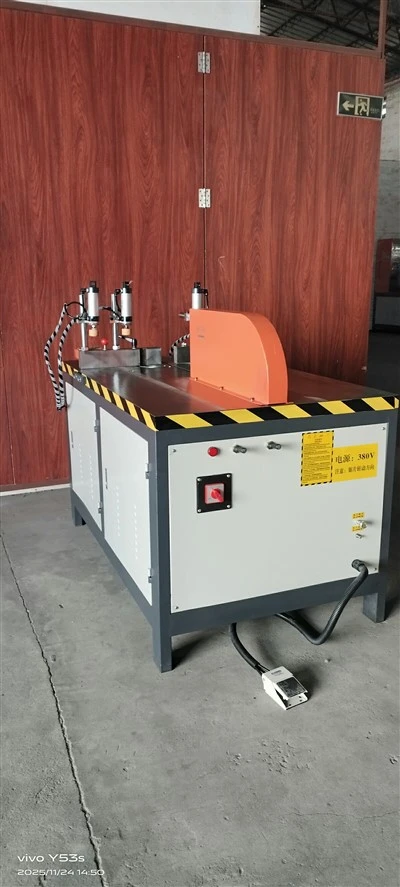
Single Head Aluminium Cutter If you’re interested in exploring how 3D printing and CNC milling can work together for your manufacturing needs, I’d be happy to discuss your requirements and provide you with more information about our CNC milling machines. Contact us today to start a conversation about how we can help you optimize your production processes and achieve your business goals.
References
- Gibson, I., Rosen, D. W., & Stucker, B. (2015). Additive Manufacturing Technologies: 3D Printing, Rapid Prototyping, and Direct Digital Manufacturing. Springer.
- Dornfeld, D. A.,Shi, X., & Xiao, B. (2006). Handbook of Machining with Grinding Wheels. CRC Press.
- Wohlers, T., & Wohlers Associates. (2020). Wohlers Report 2020: Additive Manufacturing and 3D Printing State of the Industry. Wohlers Associates.
Kanghong Building Materials Technology Sdn. Bhd.
As one of the most professional CNC milling machine manufacturers and suppliers in China, we have world-leading production equipment and strong manufacturing capabilities. Please feel free to wholesale advanced CNC milling machine for sale here from our factory. Customized orders are welcome.
Address: No.601, Block 2, Xinlianchang Industrial Park, No.2 Taixing Second Road, Taiping South Industrial Zone, Dali Town, Nanhai District, Foshan City
E-mail: 631871392@qq.com
WebSite: https://www.kanghong-building.com/
