Hey there! As a supplier of 6 Axis Robots, I often get asked about the difference between 6 Axis Robots and 7 Axis Robots. So, I thought I’d take a few minutes to break it down for you in a way that’s easy to understand. 6 Axis Robot
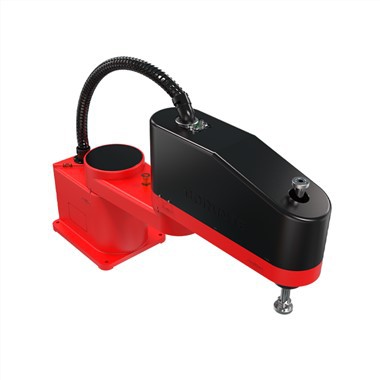
Let’s start with the basics. A robot’s "axis" refers to the number of directions in which it can move. Each axis represents a different degree of freedom, which allows the robot to perform various tasks with precision and flexibility.
6 Axis Robots
A 6 Axis Robot, like the ones we supply, has six degrees of freedom. These axes typically include:
- Base Rotation: This allows the robot to rotate around its base, giving it a full 360 – degree range of motion horizontally.
- Shoulder Pitch: Enables the robot’s arm to move up and down at the shoulder joint.
- Elbow Pitch: Controls the bending of the robot’s arm at the elbow, increasing its reach and flexibility.
- Wrist Yaw: Allows the wrist to rotate left and right, providing additional orientation for the end – effector.
- Wrist Pitch: Enables the wrist to move up and down, which is crucial for tasks like picking and placing objects at different angles.
- Wrist Roll: Allows the end – effector to roll, giving it the ability to perform tasks that require a twisting motion.
One of the biggest advantages of a 6 Axis Robot is its versatility. These robots can handle a wide range of applications, from simple pick – and – place operations in a factory setting to more complex tasks like welding, painting, and assembly. They’re also relatively easy to program, which means you can get them up and running quickly for your specific needs.
Another plus is cost – effectiveness. 6 Axis Robots are generally more affordable than their 7 Axis counterparts. This makes them a great option for small and medium – sized businesses that want to automate their processes without breaking the bank.
7 Axis Robots
Now, let’s talk about 7 Axis Robots. As the name suggests, these robots have an additional axis compared to 6 Axis Robots. This extra axis is usually located at the elbow or shoulder joint, and it provides an extra degree of flexibility.
The main advantage of a 7 Axis Robot is its enhanced dexterity. The additional axis allows the robot to reach around obstacles more easily. For example, in a manufacturing environment where there are a lot of machinery and equipment in the way, a 7 Axis Robot can maneuver its arm to access hard – to – reach areas.
7 Axis Robots are also great for tasks that require a high level of precision and smooth motion. They can mimic the movements of a human arm more closely, which is beneficial for applications like delicate assembly work or tasks that involve interacting with irregularly shaped objects.
However, there are some downsides to 7 Axis Robots. First of all, they’re more expensive. The additional axis means more components, which drives up the cost of manufacturing and maintenance. Secondly, they’re more complex to program. You need a more experienced programmer to take full advantage of the extra degree of freedom, and this can add to the overall cost of implementation.
When to Choose a 6 Axis Robot
If you’re on a tight budget and your application doesn’t require extreme dexterity, a 6 Axis Robot is probably the way to go. For example, if you’re running a simple packaging line where the products are placed in a predictable pattern, a 6 Axis Robot can handle the job just fine.
6 Axis Robots are also a good choice if you’re new to automation. Their relatively simple programming and operation make them easier to integrate into your existing processes. You can start small and gradually expand your automation capabilities as your business grows.
When to Choose a 7 Axis Robot
On the other hand, if your application involves working in a cluttered environment or requires a high level of precision, a 7 Axis Robot might be worth the investment. For instance, in aerospace manufacturing, where components are often complex and require precise assembly, a 7 Axis Robot can provide the dexterity needed to get the job done right.
If you already have an experienced robotics team and are willing to spend more on upfront costs and training, a 7 Axis Robot could give you a competitive edge in the market.
Comparison in Real – World Applications
Let’s look at a few real – world examples to see how these two types of robots perform in different scenarios.
1. Packaging:
In a typical packaging facility, a 6 Axis Robot can be used to pick products from a conveyor belt and place them into boxes. The robot can easily reach the products and place them in an orderly manner, thanks to its six degrees of freedom. A 7 Axis Robot, in this case, might be overkill, as there are usually no major obstacles to work around, and the motion requirements are relatively simple.
2. Welding:
For general welding tasks in a regular factory setting, a 6 Axis Robot can handle most jobs efficiently. However, in automotive welding, where the parts have complex shapes and there are many obstructions around the welding area, a 7 Axis Robot can reach all the necessary spots with greater ease and precision.
3. Medical Device Assembly:
Medical device assembly often requires a high level of precision. A 7 Axis Robot can be very useful here as it can perform delicate movements similar to a human hand. A 6 Axis Robot might struggle with some of the more intricate assembly steps due to its limited flexibility.
Conclusion
In conclusion, both 6 Axis and 7 Axis Robots have their own strengths and weaknesses. As a supplier of 6 Axis Robots, I firmly believe that these robots offer a great balance of performance, cost, and ease of use. They’re suitable for a wide range of applications and can help businesses of all sizes improve their productivity and efficiency.

However, I also understand that there are situations where a 7 Axis Robot is the better choice. It all depends on your specific needs, budget, and the complexity of your application.
5 Axis Servo Manipulator If you’re considering automating your processes and want to learn more about our 6 Axis Robots, I’d love to have a chat with you. We can discuss your requirements in detail and see if our robots are the right fit for your business. Don’t hesitate to reach out for a procurement discussion. Let’s work together to find the best automation solution for you!
References
- Robotics Handbook: Industrial Robotics and Automation
- Journal of Manufacturing Technology Management, articles on robotic automation in manufacturing
Borunte Robot Co., Ltd.
Borunte Robot Co., Ltd. is one of the leading 6 axis robot manufacturers and suppliers in China. We warmly welcome you to wholesale or buy discount 6 axis robot for sale here from our factory. All customized products used in different applications are with high quality and low price.
Address: NO.93, Shafu Road, Shabu Village, Dalang Town, Dongguan City, Guangdong Province, China
E-mail: borunterobotcoltd@gmail.com
WebSite: https://www.borunte.net/
