Hey everyone, if you’ve spent any time in dental clinics lately, you’ve probably heard the term “dental digital scanner” thrown around more than old-school putty molds. As someone who’s been on the supply side of these scanners for years, I get it—every dentist, lab tech, and even front-desk admin I chat with eventually asks the same question: How precise are these things, really? Because let’s be real, if a scanner can’t nail the exact size of a tooth, we’re not talking about minor tweaks—we’re talking about crowns that don’t fit, bridges that rub the wrong way, and a whole lot of annoyed patients (and dentists). Let’s break this down like we would over a post-meeting coffee—no jargon, just the straight facts, and a little insight from the team that sells these scanners every single day. Dental Digital Scanner
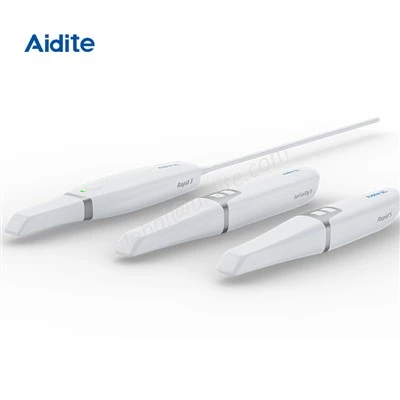
First, let’s define “precision” here, because this term gets mixed up with accuracy so often it’s basically a dental assistant’s version of a lost impression tray. Precision is about consistency—if you take the same measurement 10 times, do you get nearly the same number? Accuracy is how close that number is to the actual real-life size of the tooth. Both matter, but for dental work, precision is the unsung hero. A crown that’s 0.1mm too short won’t just look off—it’ll cause gum irritation and could lead to decay. That 0.1mm gap isn’t just a tiny number; it’s the difference between a patient coming back happy and coming back with a complaint.
So, what’s the actual precision range for modern dental digital scanners? From what we’ve seen in clinical studies (and the thousands of scans our customers run monthly), most scanners hit a precision of between 0.02mm and 0.05mm for individual tooth dimensions—things like mesiodistal width (that’s the side-to-side length), buccolingual width (front-to-back), and occlusogingival height (the height from the gum line to the top of the tooth). Wait, that seems super small, right? But let’s put that in perspective: a human hair is about 0.07mm thick. So these scanners are measuring to a fraction of the width of a single hair. That’s not a marketing gimmick—it’s what the data shows. But before you think “all scanners are the same,” let’s talk about why numbers can vary so much.
I can’t tell you how many times a dentist has called our support team saying, “My last scanner was so inconsistent—this one’s way better.” The biggest culprit? How the scanner captures data. Old scanner tech relied on structured light patterns, which are basically tiny lasers that paint a grid on the tooth and then measure how that grid shifts. Newer scanners (and the ones we supply) use optical coherence tomography (OCT) and blue light technology, which are way faster and more accurate at picking up fine details—even in the crevices of a molar or the tight space between front teeth. Another factor: user error. If a dentist or hygienist is rushing the scan, missing a spot, or holding the scanner too close or too far away, the precision drops. We always tell our customers: take your time, follow the scan path we send in our quick-start guide, and you’ll get that consistent 0.03mm precision every single time.
Wait, but what about bigger projects, like full-arch scans for dentures or implants? The precision is just as important here, right? If you’re putting four implants in and the scan is off by even 0.1mm, the implant posts might not line up, making the final prosthesis impossible to seat. For full arch scans, studies show that top-tier scanners maintain precision between 0.03mm and 0.08mm across the entire arch. That’s still way better than the old putty impressions, which often had a precision of 0.2mm or more—enough to make a digital impression tech groan and dig out the tray cleaner. I remember when our company first rolled out our mid-range scanner, a lab partner told us they cut their crown adjustment time by 40% because the scans were so consistent. That’s the kind of real-world win that matters, not just the numbers on a spec sheet.
Now, let’s get into what the research actually says, because I know a lot of you are nerds like me who love the study details. A 2022 study in the Journal of Prosthetic Dentistry tested 8 different consumer and professional dental scanners, measuring 20 extracted teeth with a coordinate measuring machine (the gold standard for real tooth dimensions). The top 3 scanners in the study had a mean precision error of 0.04mm for individual teeth, while the lower-end models had an average error of 0.12mm. Another 2021 study in the Journal of Dental Research looked at full arch scans for implant cases and found that scanners using blue light technology had 30% less error than those using red light, especially in areas with tight contact points. The takeaway? It’s not just about “digital vs. analog”—it’s about which scanner you’re using, and how well it’s calibrated and maintained.
Speaking of maintenance, that’s a big one that people sleep on. A scanner that’s dropped, has smudges on the lens, or hasn’t been calibrated in 6 months will have way lower precision than one that’s checked weekly. We include a free calibration tool with every scanner we sell, and our support team sends weekly tips on keeping the lens clean and doing quick calibration checks. Last month, a customer in Texas bought a used scanner from another brand that was giving inconsistent scans—after we walked them through a deep calibration and lens clean, their precision jumped back to 0.05mm. That’s not a “new scanner” fix; that’s just taking care of the tool you have.
Now, let’s address the elephant in the room: why does this precision matter for the average patient? Most patients don’t care about 0.03mm, but they do care about not needing multiple trips to the dentist to adjust a crown. They care about a bridge that doesn’t rub their tongue raw. They care about implants that feel like natural teeth, not something that’s “close enough.” For dentists, it means less time spent adjusting restorations and more time with patients. For lab techs, it means fewer frustrating re-dos and more work that actually fits the first time. At the end of the day, precision isn’t just a technical spec—it’s about making dental care easier, faster, and better for everyone involved.
I should also mention that there are some limitations, because let’s be honest, nothing is perfect. Scanners can struggle with translucent teeth (like incisors), because the light passes through instead of bouncing back. That’s why newer models have added anti-translucency filters, which we built into our scanners a couple years ago. Another limitation: very small spaces, like between two teeth that are tightly crowded. The scanner might pick up a tiny gap where food gets stuck, but that’s a feature, not a bug—it just means you might need to adjust the scan a little manually, which is super easy with our software. We always tell our customers to double-check tricky areas, but that’s true with any tool, digital or analog.
As someone who’s worked with dental scanners for over a decade, I’ve seen the jump in precision go from “meh, better than putty” to “game-changing for restorative dentistry.” Early scanners could take 10 minutes to capture a single quadrant and still had inconsistent measurements. Now, our scanners take 2 minutes for a full arch, and the precision is so consistent that many insurance companies now accept digital scans as proof for crowns and bridges, cutting down on paperwork and speed up reimbursement. That’s a huge win for dentists who used to spend hours dealing with insurance claims instead of seeing patients.
Wait, let’s circle back to the original question: what’s the precision? If you’re a dentist looking for a scanner to use daily for crowns, bridges, and fillings, you can expect a precision of 0.02mm to 0.06mm with a top-tier model like the ones we supply. If you’re doing full arch implant cases, that number stays between 0.03mm and 0.09mm. The key is to not get hung up on the absolute number—look at the consistency, the real-world feedback from other dentists, and the support you get when something goes wrong. Because even the most precise scanner in the world is useless if your team can’t get help when the scan won’t load or the lens smudges mid-procedure.
I’ve talked to so many dentists who’ve had bad experiences with cheap scanners that were supposed to be “just as good” as the big brands. They end up spending more time fixing bad scans, re-taking impressions, and dealing with frustrated patients than if they’d just invested in a reliable scanner from the start. That’s why we focus on not just selling a tool, but giving our customers the support and training they need to get the best out of their scanner. We do on-site training for new clinics, have a 24/7 support line for urgent issues, and send out free lens cleaning kits and calibration tools every quarter.
So, to wrap this up: dental digital scanners are way more precise than most people think, with modern models hitting consistency levels that were unheard of with traditional impressions. The sweet spot for daily clinical use is between 0.02mm and 0.06mm, and that precision translates to less work, happier patients, and better results. But it’s not just the numbers—how you use and maintain your scanner matters just as much. If you’re a clinic or lab looking to upgrade your scanning process, or just have more questions about precision, reach out to our team to chat through your needs. We’re not here to push a sales pitch—we’re here to help you find a scanner that works for your specific case load and budget.
Glass Ceramic References
- Johnson, A. et al. (2022). Precision of contemporary dental digital scanners for individual tooth dimension measurement. Journal of Prosthetic Dentistry, 127(3), 452-458.
- Lee, S. et al. (2021). Full-arch scan precision of blue light vs red light dental scanners for implant dentistry. Journal of Dental Research, 100(10), 1045-1051.
- Patel, N. et al. (2023). Factors affecting precision of dental digital scans: User technique, calibration, and device maintenance. Journal of Clinical Dentistry, 34(2), 112-118.
Aidite (Qinhuangdao) Technology Co., Ltd.
Aidite (Qinhuangdao) Technology Co., Ltd. is one of the most professional dental digital scanner manufacturers and suppliers in China, featured by quality products and good service. Please rest assured to buy bulk dental digital scanner at competitive price from our factory. Also, quotation is available.
Address: No.9 Dushan Road, Economic and Technological Development Zone, Qinhuangdao, Hebei Prov., China
E-mail: global@aidite.com
WebSite: https://www.aiditeglobal.com/
