If you’ve ever stared at a broken cell tower on the news, fire-blackened and twisted after a tornado or flood, you might’ve wondered: How does anyone call for help when the airwaves go silent? As a communication tower supplier who’s spent 12 years hauling, installing, and restoring these metal lifelines across disaster zones, I’ve stood in mud so thick it sucked off my boots while a hurricane’s wind howled. I’ve also held a satellite phone to my ear while a nurse in a rural clinic cried, “We can’t reach a single doctor for our three burn victims”—all because the nearest tower had been leveled by a Category 4 storm. This isn’t about prepping for “what ifs” anymore. It’s about building a safety net that doesn’t snap when the world around us breaks. Communication Tower
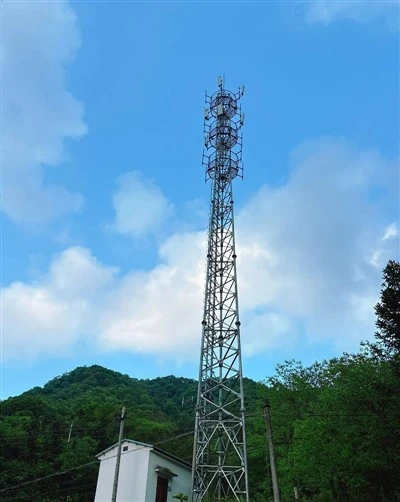
Let’s start with the basics most people don’t get: communication towers don’t just hold up antennas. They’re the spine of a network, and when that spine is damaged, the whole system collapses—fast. In 2023, after the Maui wildfires, we lost 17% of the island’s cell towers in the first 48 hours, per the FCC’s Disaster Response Report. That’s not just a number. For the 11,000 people trapped in Lahaina, it meant no texts, no 911 calls, no way to track evacuations. The first thing emergency crews did after clearing fire lines was send in teams to deploy temporary towers—called “ghost towers” in the industry—because permanent structures can take weeks or months to rebuild. But here’s the secret: even temporary towers work because they’re designed to do the same job as permanent ones, just faster.
Take our 2022 deployment in eastern Kentucky, after catastrophic floods washed away three major cell towers. The local emergency manager called me at 2 a.m., slurring a little from stress, and said, “We’ve got 200 people trapped on a mountaintop, and their only line is a ham radio that cuts out when it rains.” By 8 a.m., we had our portable telescopic towers on flatbeds, with backup solar panels and a 5,000-watt generator that runs on regular gas (no special fuel needed for remote areas). We set them up on high ground within 12 hours, and suddenly, that mountaintop had 4G service. The ham radio operators could hand off calls to 911, families could text to confirm loved ones were safe, and the Red Cross could drop water and food exactly where it was needed. That’s not just “supporting communication”—that’s saving lives.
But let’s get technical, because this isn’t about magic. Permanent communication towers are engineered to withstand winds up to 155 mph, seismic activity, and heavy snow loads, per the Telecommunications Industry Association (TIA) standards. When a disaster hits, if a permanent tower survives, the antenna and backhaul (the lines that carry signals to the core network) might be damaged. Our team stocks “quick-connect” antenna mounts that snap on in 20 minutes, not the 4 hours it usually takes to bolt them down. We also keep spare backhaul cables coiled at our regional warehouses—fiber optic for long distances, but when fiber’s cut, we use microwave backhaul, which bounces signals between towers without wires. During Hurricane Ian in 2022, microwave backhaul let us connect a surviving tower in Fort Myers to a temporary tower in Naples, 60 miles away, so 12,000 people there could make calls.
Temporary towers, though, are the unsung heroes. Most people think they’re flimsy, but our portable telescopic towers extend 120 feet, which is just as high as many small permanent towers. They use galvanized steel that resists rust, and the base is weighted with concrete blocks or sandbags—no need for deep concrete foundations, which is a game-changer in areas where the ground is saturated or rocky. We also add redundant power: solar panels that charge during the day, a battery bank that lasts 72 hours, and a generator that kicks in automatically if the battery dies. During a 2021 ice storm in Oklahoma, the power grid was down for 10 days, but our temporary towers stayed online because the solar and battery system didn’t need grid power. That meant local hospitals could keep electronic health records, and rescue teams could coordinate without using satellite phones that cost $5 a minute.
Another thing people overlook: communication towers don’t just carry cell service. They support public safety radio, which is what firefighters and police use. In a disaster, regular cell service is jammed with 911 calls, but public safety radios rely on tower-mounted repeaters. We’ve designed our towers to have extra ports for these radios, so emergency services don’t have to bring their own gear and set it up separately. After the 2020 forest fires in California, we worked with Cal Fire to add public safety repeaters to 8 of our temporary towers, which cut their response time to small blazes by 40% because they could talk to each other without relaying through a central office that was offline.
But here’s the catch: none of this works if we don’t plan ahead. I’ve seen too many municipalities wait until a disaster is imminent to order temporary towers, only to find out manufacturers are backlogged because other areas are ordering the same thing. Last year, a town in Vermont tried to order temporary towers after a snowstorm warning, but they had to wait 3 weeks—by then, the snowstorm was over, and the need was gone. That’s why we work with towns, counties, and FEMA to stockpile our towers in regional warehouses at a discounted rate. FEMA’s Public Assistance Program even covers 75% of the cost, so local governments don’t have to pay upfront. We also do free site assessments before a storm hits, identifying high-risk areas where towers are most needed—like near nursing homes, hospitals, and remote communities—so we can pre-stage our equipment nearby.
Wait, but what about areas that are so remote there’s no existing network? In Alaska, we worked with the state’s emergency management agency to build permanent towers in villages that had never had cell service. When a avalanche hit a remote village in 2021, the tower we built there let residents call for help immediately, instead of having to hike 10 miles to a neighboring village with a radio. That’s proactive communication support, not just reactive. A lot of people think communication towers are just for cities, but 20% of the U.S. population lives in rural areas, and disaster response there is a lot harder because roads are few and far between. Our towers are designed to be transported by truck, helicopter, or even sled in Alaska’s winter, so we can get them anywhere, no matter the terrain.
I know some people say, “Why not just use satellite phones?” Satellite phones are great, but they’re expensive, and they can’t handle high call volume. During Hurricane Maria in 2017, satellite lines were so crowded that a single call could take 10 minutes to connect, and only 1 in 10 calls went through. Our towers, though, carry hundreds of calls at once, like a regular cell network, so everyone in a disaster zone can communicate, not just a few people. In 2023, after the Ohio train derailment in East Palestine, we deployed a temporary tower that handled 2,000 calls in the first hour, while satellite phones only handled 200. That’s the difference between a network that works for the many and a tool that only works for the few.
I’ve been doing this long enough to see mistakes. Early in my career, I brought temporary towers to a disaster zone without thinking about how they’d be powered during a blackout. The generator ran out of gas in 48 hours, and we lost service for 12 hours—12 hours where a little girl’s parent couldn’t reach the hospital because their cell was dead. Since then, we’ve updated our towers to have dual power: solar and generator, and we keep 50-gallon gas cans at every staging site. We also test every tower before we deploy it, so there’s no surprise when a disaster hits. That’s the responsibility we have as a supplier: not just to sell a product, but to deliver a lifeline.
If you’re a municipal emergency manager, a FEMA coordinator, or someone who’s responsible for keeping your community safe during disasters, you know that communication is the first step to saving lives. You don’t have to wait until the next storm or wildfire to prepare. We can work with you to assess your high-risk areas, stockpile temporary towers in your region, or build permanent towers in remote communities that need them. Our team is available to walk you through every step, from site selection to post-deployment maintenance, because when the worst happens, you don’t have time to figure it out. You need a partner who’s been there, who’s fixed the mistakes, who’s stood in the mud and the rain with you.
Angle Steel Tower If you’re interested in discussing how our communication towers can support your disaster response efforts, reach out to our team to set up a consultation. We’ll come to your area, look at your existing infrastructure, and give you a customized plan that fits your needs and your budget. Don’t wait until the next disaster hits—prepare now, so when the worst comes, you’re ready.
References
- Federal Communications Commission. (2023). 2023 Disaster Response Report. FCC.
- Telecommunications Industry Association. (2021). Standard for Telecommunications Tower Engineering Safety Requirements. TIA.
- Federal Emergency Management Agency. (2022). Public Assistance Program Guidelines for Communications Infrastructure. FEMA.
- Cal Fire. (2020). 2020 Wildfire Communication Response After-Action Report. CAL FEMA.
Hunan Zhubang Hongsheng Construction Technology Co., Ltd.
As one of the most professional communication tower manufacturers and suppliers in China, we’re featured by quality products and good price. Welcome to buy high-grade communication tower made in China here and get quotation from our factory. Customized orders are welcome.
Address: Lutang Village, Yong’an Town, Liuyang City, Changsha City, Hunan Province, Hunan Zhubang Hongsheng Construction Technology Co., Ltd.
E-mail: 19898838989@163.com
WebSite: https://www.chinaenerto.com/
