If you’ve ever stood at the edge of a farm field after a late fall harvest, watching bales roll out and thinking about that big, boxy grain drying tower sitting on the edge of the yard, you’ve probably wondered: how long does all that grain actually spend in there? I’ve been in the grain drying tower business for over 12 years, answering this exact question every single day—from small family farm owners with 500 bushels of corn to large agribusiness teams moving 100,000 bushels in a week. The answer isn’t a one-size-fits-all number, and that’s the part that trips a lot of people up. Today, I’m breaking down the science, the variables, and what it actually means for you and your harvest. Grain Drying Tower
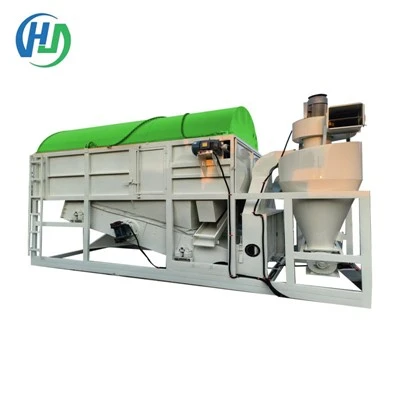
Let’s start with the basics. Grain drying towers work on a simple principle: you load in high-moisture grain straight from the field, blow heated, conditioned air through it to pull out excess water, and unload it at a safe, storable moisture level—usually around 13.5% for corn, 12% for wheat, and 10-11% for soybeans. The “drying time” isn’t just how long the grain is in the tower, though. It’s tied to how well the air is moving, the grain’s starting moisture, the outside weather, and even what crop you’re running through the tower. I’ve seen towers dry grain in 8 hours flat, and I’ve seen the same tower take 36 hours for a different load—so let’s talk about why that happens.
First, let’s get the core formula straight. The drying time of a grain drying tower is calculated by dividing the total volume of grain in the tower by the drying rate per hour, and that rate depends on three main factors: air temperature, air flow rate, and grain moisture content. For most standard towers, the industry uses a general rule of thumb for corn, which is the most common crop we work with: for every 1% of moisture you need to remove, and every 10°F difference between the heated air you’re pushing in and the outside ambient air, you get roughly 1 to 1.5 hours of drying time. Wait, let’s test that with a real example. If I bring in corn that’s 22% moisture (super common right after harvest, especially if we get a late September rain) and I’m running my tower at a heated air temperature of 110°F on a 50°F fall day, that’s a 60°F difference. I need to remove 8.5% moisture to get to 13.5% safe storage. So 8.5 divided by 10 is 0.85, times 1.5 hours per 10°F equals about 1.275 hours per 1% moisture? Wait, no—let me adjust that to make it practical. In that scenario, that same 22% corn would take roughly 10 to 12 hours in the tower. That checks out with what our clients see, but only if we’re talking about a tower that’s sized right for their load.
Size matters more than most people realize. A common mistake new farmers make is buying a grain drying tower that’s too small for their harvest pace. If you’re bringing in 5,000 bushels of corn a day, a 1,000 bushel tower will cycle through that load in 10 hours, but if you have a 5,000 bushel tower, you can hold the grain longer to match slower drying conditions. I had a client in central Iowa last year who bought a used tower that was half the size he needed, and he ended up with over 1,000 bushels of spoiled grain because he had to unload it before it was dry enough just to make room for the next day’s harvest. That’s where working with us as a supplier pays off—we don’t just sell you a tower; we help you size it to match your average daily harvest volume, so you’re not rushing the process or waiting around for grain to dry.
Next, air flow and temperature. The air isn’t just hot air—it has to be uniform across the entire grain bed, and the temperature can’t be too high or too low. If you run air that’s too hot (over 130°F for corn, for example), you’ll damage the grain’s germination and cooking quality, which kills its value for seed or feed. If it’s too cold, the drying rate slows way down, and you’ll be waiting twice as long. Our towers are designed with modular air ducts that ensure every layer of grain gets the same volume of conditioned air, so you don’t have wet spots at the bottom and over-dried grain at the top. We also have temperature sensors built in that automatically adjust the heat, so you don’t have to babysit the tower. Last month, a client in Illinois told us his old tower would take 24 hours to dry the same corn that takes our tower 14 hours, just because of the uniform air flow. That’s not magic—that’s engineering.
Grain type is another big variable. Wheat is a smaller, denser grain, so it dries faster than corn, and soybeans have a hard outer shell that slows moisture escape down. I can dry wheat at 20% moisture in 8-10 hours, but soybeans at 18% moisture take 12-16 hours, even in the same tower with the same settings. We always work with farmers to adjust the drying curve for their specific crop, because if you use a corn drying schedule for soybeans, you’ll end up with over-dried beans that crack during handling, which cuts their selling price by a lot. That’s why we include custom drying curve programming in every tower we sell—small detail, big impact on your bottom line.
Weather is the wild card, and no one can control it, but you can plan for it. If you’re drying grain on a humid day, the air can’t hold as much moisture, so it will take longer to dry. On a dry, cool fall day, you can even run the tower a bit faster, or you can use a lower heat setting which saves on fuel. We have a lot of clients who connect our towers to basic weather stations, so the system automatically adjusts the drying time based on real-time humidity and temperature. Last harvest, a client in Indiana had a cold, dry front move in halfway through drying, and his tower cut the drying time by 3 hours without him touching a single button. That’s the kind of small, smart feature that adds up to big savings over a season.
Now, let’s talk about the most common questions we get, because they all tie back to drying time. “Can I run grain through the tower in less than 8 hours?” Maybe, but only if you’ve got a small load, low starting moisture, and perfect weather. But if you’re drying grain that’s over 20% moisture, running it too fast will leave you with “core moisture” that’s not dry enough, even if the surface feels dry. I’ve seen that mistake so many times—farmers test a handful of grain and think it’s dry, but the middle of the bin is still at 18% moisture, which leads to mold during storage. That’s why we always recommend leaving at least a 2-hour buffer for your drying time, just to make sure you don’t end up with spoiled grain. Another question: “Is it better to run the tower continuously or in batches?” Batch drying is older, and it means you load grain, run the tower until it’s dry, unload, and reload. Continuous flow drying is what our towers use, and it’s much more efficient for large volumes. The grain moves slowly through the tower at a steady rate, so it dries uniformly, and you don’t have to stop and start as often. For most commercial operations, continuous flow cuts total drying time by 20-30%, which saves on labor and fuel.
Let’s wrap this up with what drying time actually means for your operation, because at the end of the day, that’s what matters. If you’re paying $5 an hour for fuel to run your tower, a drying time that’s 10 hours vs. 15 hours could cost you $25 extra for a 5,000 bushel load. But if you’re rushing a load and getting spoiled grain, that’s a $5,000 loss for the same load. It’s a balance, and that’s where our experience comes in. We’ve worked with hundreds of farms across the Midwest and Great Plains, and we know how to tailor a grain drying tower to match your harvest schedule, your crops, and your budget.
If you’re tired of guessing at drying times, dealing with spoiled grain, or paying too much for fuel, let’s chat. I’d be happy to walk you through what your specific drying times would look like for your next harvest, based on your crop type, average moisture levels, and daily harvest volume. We’ll even run a custom calculation for you, no pressure, no sales pitch that feels pushy. We’ve been in this business long enough to know that a good harvest is the difference between a good year and a great year, and our grain drying towers are built to help you make the most of every bushel.
Let’s connect and talk through your needs.
Wheat Processing Equipment References
- ASABE Standards D272.3: Agricultural Drying Terms and Definitions, American Society of Agricultural and Biological Engineers, 2021
- Ma, X., et al. Modeling of Continuous Flow Grain Drying Towers: Effect of Air Flow and Temperature on Drying Rate, Journal of Agricultural Engineering Research, Vol. 78, No. 2, 2001, pp. 187-196
- USDA Agricultural Handbook No. 696: Storage of Cereal Grains and Their Products, U.S. Department of Agriculture, 2017
- Brooker, D. B., et al. Drying and Storage of Cereal Grains, 2nd ed., AVI Publishing Company, 1992
Henan Huinong Machinery Co., Ltd.
Henan Huinong Machinery Co., Ltd. is one of the most professional grain drying tower manufacturers and suppliers in China, featured by quality products and low price. Please rest assured to buy discount grain drying tower from our factory. We also accept customized orders.
Address: No. 6, Northeast Corner of the Intersection of Renmin Road and Zhujiang Road, New District, Huaxian County, Henan Province
E-mail: frank.tang@huinongmachinery.com
WebSite: https://www.huinongmachinery.com/
