If you’ve ever held a soft, resilient batch of synthetic fiber used in everything from filtration systems and cosmetic applicators to textile reinforcement and even cigarette filters, you’ve likely interacted with polyester tow. As a polyester tow supplier, I get asked this question all the time: What exactly is its chemical composition? It’s not just a random mix of plastic—it’s a carefully engineered material, crafted to balance strength, flexibility, and consistency for industrial and commercial use. Let’s break down the science, how it’s manufactured, and why that composition matters for every application we serve. Polyester Tow
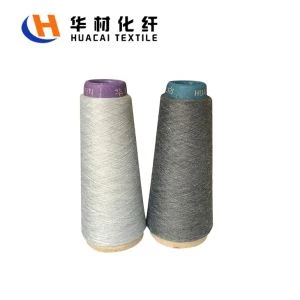
First, let’s start with the core polymer that makes polyester tow what it is: polyethylene terephthalate, or PET for short. You’ve almost certainly encountered PET before, even if you didn’t know the name. It’s the same plastic used for single-use water bottles, food packaging containers, and even some clothing fibers. But the PET in polyester tow isn’t the same as the PET in a soda bottle, and that’s a critical distinction. The PET used for packaging is designed to be rigid, lightweight, and easy to mold into shapes. For polyester tow, we need a PET polymer that’s been optimized to form long, uniform fibers that can be twisted, crimped, and processed into a tow—a bundle of thousands of individual filaments bound together into a single, usable strand.
The chemical structure of PET is what gives it its signature properties. It’s a thermoplastic polymer, which means it softens when heated and hardens when cooled, making it ideal for melt-processing into fibers. The molecular chain of PET is made up of repeating units of two monomers: terephthalic acid (a dicarboxylic acid) and ethylene glycol (a diol). These two monomers undergo a polymerization reaction, called condensation polymerization, where they link together and eliminate a small molecule (water, in this case) to form the long PET chains. The exact length and arrangement of these chains are what make PET suitable for tow production.
Now, not all polyester tow is 100% pure PET—depending on the end application, we may add small quantities of chemical additives to tailor the material’s performance. As a supplier, we work closely with our customers to adjust these additives based on their needs, and that’s one of the reasons polyester tow is so versatile. Let’s go over the most common additives, what they do, and why they matter:
First, there are delustering agents. Most people think polyester is a bright, shiny fiber, but many applications (like filtration media or cigarette filters) require a softer, matte finish. Titanium dioxide (TiO2) is the most common delustering agent we use. We add it in concentrations ranging from 0.1% to 5% by weight, depending on how matte the customer wants the final product. TiO2 particles scatter light, which dulls the fiber’s natural gloss without significantly altering its strength or flexibility. For example, a customer making medical-grade polyester tow for swabs might use a higher concentration of TiO2 to get a smooth, non-glossy surface that’s gentle on skin, while a customer making reinforcement tow for plastic composites might use little to no delusterant to keep the fiber’s surface smooth for better bonding with the plastic matrix.
Next, there are antistatic agents. Static electricity is a major issue with synthetic fibers, especially when they’re being processed into tow or used in dry environments. If you’ve ever worked with synthetic fabric and gotten a static shock when touching a metal doorknob, you’ve experienced this. For polyester tow, static can cause fibers to stick together, clog processing equipment, or even create safety hazards in environments with flammable materials. To prevent this, we add antistatic agents—typically either cationic, anionic, or non-ionic surfactants. These agents migrate to the fiber surface when the tow is processed, attract moisture from the air, and create a conductive layer that dissipates static charge. The type and concentration of antistatic agent depend on the application: tow for textile manufacturing might use a more durable antistatic that lasts through multiple washing cycles, while tow for filtration systems might use a temporary antistatic that wears off over time if that’s preferred.
Then there are flame retardants. For applications where polyester tow is used in public spaces, transportation, or industrial settings, fire resistance is non-negotiable. Standard PET is flammable, so we add flame retardant additives to meet specific safety standards, like UL 94 or EN 45545. Common flame retardants for polyester include halogenated compounds (though we’ve shifted toward halogen-free options in recent years for environmental and regulatory reasons) and phosphorus-based compounds. These additives work by interrupting the combustion process: they either release water vapor to cool the burning material, form a char layer that prevents oxygen from reaching the flame, or release non-flammable gases that dilute the fuel. It’s important to note that adding flame retardants can slightly alter the fiber’s flexibility or strength, so we adjust the concentration based on the customer’s performance requirements and safety standards.
We also add small amounts of heat stabilizers and UV stabilizers for specific use cases. Heat stabilizers prevent the PET polymer from degrading when it’s processed at high temperatures (during melt spinning, for example) or when it’s used in high-heat applications, like automotive interior parts. UV stabilizers, on the other hand, protect the tow from damage when it’s used outdoors, like in geotextiles or outdoor furniture fabrics. UV radiation can break down the PET molecular chains over time, causing the fiber to become brittle and lose strength. Adding UV stabilizers (like hindered amine light stabilizers, or HALS) helps extend the tow’s lifespan by absorbing or blocking harmful UV rays.
Now, let’s talk about how these components come together to form polyester tow, because the manufacturing process is just as important as the chemical composition. As a supplier, we start with virgin PET resin (we do not use post-consumer plastic in our tow, as consistency is critical for our customers’ manufacturing processes). The resin is dried to remove moisture—even tiny amounts of water can cause the PET to degrade during melting, which would result in weak, inconsistent fibers. Once dried, the PET is fed into an extruder, where it’s melted at around 260°C (500°F). The molten PET is then pushed through a spinneret—a metal plate with hundreds of tiny holes, each just a fraction of a millimeter in diameter. As the molten PET exits the spinneret, it solidifies into continuous filaments, which are then cooled with air.
Next, the filaments are treated with a spin finish, which is a mixture of lubricants, antistatic agents, and other additives that help the filaments stick together into a tow bundle and prevent them from breaking during the next steps. The spin finish is a crucial part of the final composition, even though it’s a temporary coating that is often removed later in processing. After the spin finish is applied, the filaments are drawn—stretched to several times their original length—to align the PET molecular chains, which increases the fiber’s tensile strength and modulus (stiffness). Finally, the tow is crimped, or given a wavy texture, which gives it bulk and makes it easier to process into the final product. The crimp also improves properties like filtration efficiency or absorption, depending on the application.
You might be wondering why we use PET specifically, instead of other synthetic polymers like polypropylene or nylon. The answer lies in the balance of properties that PET offers: it’s strong, flexible, resistant to chemicals, has a low moisture absorption rate, and is relatively low-cost compared to other engineering plastics. For example, polyester tow is more resistant to acids and alkalis than nylon, making it ideal for chemical filtration, and it has higher tensile strength than polypropylene, making it better for reinforcement applications. The chemical stability of PET also means it doesn’t break down easily in most environments, which is a benefit for products that need to last for years, like geotextiles, or a drawback for applications where biodegradability is important—though that’s a topic for another blog post.
As a supplier, I know that our customers don’t just want a generic polyester tow. They need a product that is tailored to their specific application, which is why the composition (including the additives and processing parameters) is always customized. For example, a customer that makes cigarette filters needs tow with very specific crimp levels, particle size distribution, and filter efficiency, while a customer that makes cosmetic pads needs tow that is ultra-soft, non-abrasive, and has a high water absorption rate. We work with each customer to test different compositions, adjust additive levels, and ensure that the final tow meets their performance standards, whether that’s meeting FDA regulations for medical use, EU REACH standards for environmental safety, or custom specifications for a unique application.
One thing I want to emphasize is that while polyester tow is a man-made material, its composition is highly regulated and tested. Every batch of tow we produce undergoes quality control testing to verify its chemical composition, tensile strength, flexibility, and other key properties. We test for residual additives, filament uniformity, and consistency across batches, because even a small variation in composition can cause problems for our customers’ manufacturing processes or final products. For example, a customer producing air filtration media can’t have tow with inconsistent fiber diameter, because that would lead to uneven filtration efficiency and higher pressure drop, which would make the filters less effective and more expensive to operate.
If you’re working with polyester tow—whether you’re a manufacturer, a designer, or someone who is just curious about the material—understanding its chemical composition is key to choosing the right tow for your needs. The core PET polymer gives it its base properties, while the additives and processing steps tailor it to specific applications. As a supplier, our job is to not just provide a product, but to partner with our customers to find the right composition that meets their unique requirements.
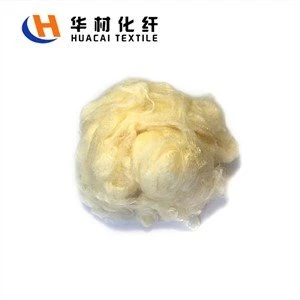
If you’re looking for a reliable polyester tow supplier, or if you have questions about the composition of our tow and how it can work for your application, we’re here to help. Our team has years of experience working with polyester tow, and we can provide sample batches, test reports, and customized solutions to meet your needs. Reach out to our team to start a conversation about your requirements and how our polyester tow can support your projects.
Nylon Staple Fiber References
- Saul, S. L. (2012). Synthetic Fibers: Chemistry and Technology. Woodhead Publishing.
- Lewin, M. (2007). Handbook of Fiber Chemistry, 3rd Edition. CRC Press.
- Horrocks, A. R., & Price, D. (2001). Flame Retardant Materials. Woodhead Publishing.
- Patton, J. T. (1992). Polymer Fiber Technology: Principles and Practice. Wiley-VCH.
Huacai Group
Huacai Group is well-known as one of the leading polyester tow manufacturers and suppliers in China, featured by quality products and good service. Please feel free to buy bulk polyester tow at competitive price from our factory.
Address: No.188 Zhenyang Road, Qingyang Town, Jiangyin City, Jiangsu Province, China
E-mail: sales@huacaifiber.com
WebSite: https://www.huacaifiber.com/
