Hey everyone, and welcome back to the blog! Today I’m answering one of the most common questions we get here at the light duty cable tray shop: “Can light duty cable tray be installed vertically?” Light Duty Cable Tray
I know, this seems like a straightforward question at first, but when you’re actually wiring a commercial space, office building, or even a retail store, there’s a lot more to it than just stacking a tray on its side. Let me break this down from both our perspective as a supplier and the real-world stuff our installers deal with every day.
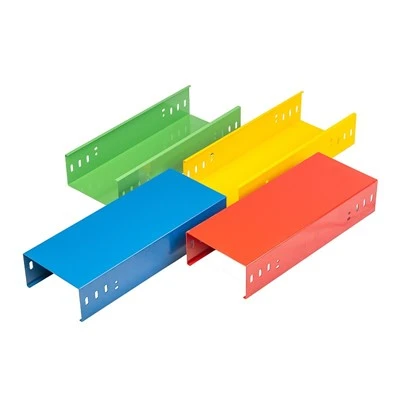
First, let’s set the stage: What even is a light duty cable tray, anyway? For those who don’t know, light duty cable tray is designed for smaller, lighter cables— think low-voltage data cables, Ethernet lines, CCTV wiring, speaker cables, even small control cables for HVAC systems. It’s not the heavy steel stuff you see supporting power lines in a factory or warehouse, which is way thicker and rated for way more weight. Ours is made for commercial and light industrial spaces where you don’t need to hold 100-pound power cables, just delicate (but important) smaller wires.
Now, vertical installation. Most people picture cable tray running along a ceiling or a wall horizontally, right? But vertical runs are super common too. You might be running cables from a server room on the 10th floor down to a closet on the 1st, or running lines up a stairwell to connect different floors, or even along a wall in a retail space to hide cables for digital signs. So yeah, vertical isn’t some weird niche— it’s pretty standard. But does light duty cable tray work there?
Short answer: Yes, it can be done safely— but it’s not just slapping a vertical bracket and calling it a day. There are a bunch of rules, and a lot of folks make mistakes that lead to sagging cables, pulled-out connections, or even damaged wiring that causes downtime. Let’s talk about what actually works for our trays specifically, since that’s what we know best.
First, let’s get the basics out of the way with National Electrical Code (NEC) because, let’s be real, you can’t install electrical stuff without following code. I’ve been in this industry for 12 years now, and the NEC hasn’t changed much on this point in that time: Cable tray, regardless of duty rating, can be installed vertically as long as you follow the manufacturer’s load ratings and support spacing. For light duty cable tray, that means our trays are rated for a maximum load per linear foot, and that number drops a little when they’re installed vertically. Wait, why? Because horizontal installations have the load sitting in the bottom of the tray, spread out over the length of the run. Vertical installations? The load is pulling downward along the length of the tray itself, so the support points have to be closer together to hold it tight. That’s a key point most people miss when they first try to go vertical.
Let me give you an example. For horizontal runs, our standard light duty tray recommends supports every 8 feet for average cable loads. But when you flip that to vertical? We recommend supports every 4 feet, max. If you space them 8 feet apart like you would for horizontal, you’ll get a dip in the middle that puts too much tension on the cables— and if those cables are Ethernet, that can cause signal loss, which is a nightmare for a office or a retail store. We’ve had customers come to us after that exact problem, saying their Wi-Fi cut out because the cables stretched too tight. That’s avoidable with the right support spacing.
Next, how do you actually secure vertical runs? A lot of installers just use L-brackets that screw into the wall every few feet, but that’s not enough for light duty trays sometimes. Wait, no— actually, L-brackets work, but you have to make sure they’re rated for the tray’s vertical load. A regular wall bracket might hold a horizontal tray fine, but vertical? The bracket has to resist downward pull, not just support weight from below. We sell specific vertical mounting clips that are made for this exact purpose— they wrap around the tray’s sides so it doesn’t tip or slip, not just sit on top of a bracket. We’ve seen installers use regular angle brackets and end up with a tray that tilts, so all the cables slide to one side. That’s another mistake: vertical tray has to be plumb, not just “close enough” to the wall. If it’s even a little off, cables shift, and you might get too much weight on one side, causing a collapse.
Wait, what about cable management itself? Even if the tray is installed right, you can’t just dump all the cables into a vertical run and call it good. For horizontal runs, you can lay cables loosely, but vertical needs cable ties or separators every 2 to 3 feet to keep them from bunching up at the bottom. Oh, and here’s a pro tip we learned from our install team last year: Never exceed 70% of the tray’s fill capacity, even for vertical. Horizontal runs can handle a little more, but vertical means the weight of the cables is pulling down, so overfilling puts way too much stress on the tray’s side rails. We had a customer in a doctor’s office try to cram 120% of their CCTV and data cables into a vertical tray, and the side rails buckled halfway up the run. That’s a $500 repair job they didn’t need, just because they overfilled it.
Now, let’s talk about common myths we hear all the time. Myth #1: Light duty cable tray is only for horizontal runs. No way— we’ve shipped trays to 47 states in the last 5 years, and 30% of those orders are for vertical installations. Most of those are offices, school buildings, and small retail spaces, and they’ve all worked out as long as they followed the rules. Myth #2: Vertical installation requires heavy duty steel tray. That’s just not true. Our light duty tray is made from galvanized steel, which is strong enough for vertical runs if you use the right supports and don’t overfill. We test every batch of our trays for vertical load capacity in our warehouse, so you don’t have to guess. Myth #3: You don’t need fire rating for vertical. Wait, that’s a separate thing, but a lot of people mix up tray type with fire rating. If your space needs fire-rated cable management, our light duty line does have fire-treated options, even for vertical runs. Just make sure you specify that when you order, and we’ll hook you up with the right stuff.
Wait, what about special cases? Like, super long vertical runs, like 50 feet or more? Can light duty tray handle that? Let’s do the math. A standard light duty tray is 10 feet long, right? So 50 feet would mean 6 support points (top, every 8 feet, bottom). As long as you use our heavy-duty vertical mounting clips, keep the cable load under the tray’s rating, and add a cable support bar at the very bottom to catch any slack, it works. We did a 60-foot vertical run for a corporate headquarters last year, and they’ve had zero issues in the 18 months since installation. That’s longer than I would’ve guessed, but it’s totally doable.
But here’s the hard part: If you’re not experienced with cable tray installations, it’s easy to cut corners. That’s why a lot of people come to us saying they tried vertical light duty tray and it failed. They spaced supports too far apart, used the wrong brackets, overfilled the tray, or skipped the cable ties. We’ve got install guides right on our website that walk you through every step for vertical runs— support spacing, bracket type, cable load limits, all that stuff. We even have a free tech service line you can call if you’re planning a vertical run, and one of our guys will walk you through it over the phone. No sales pitch, just actual advice from people who install this stuff every day.
Let me give you a real example of a bad vs. good vertical install. Bad install: A small coffee shop in downtown Austin tried to run a vertical tray from their POS system to the back office. They used standard horizontal supports, spaced 8 feet apart, overfilled the tray with 10 different cables, and just screwed L-brackets into the drywall. Within a month, the tray tilted 15 degrees, all the cables slid down to the bottom, and their POS system went down during a Saturday rush. They had to replace half the tray and all the cables, which cost them way more than if they’d done it right the first time. Good install: A law firm in Chicago did the same run, but they used our vertical mounting clips, spaced supports every 4 feet, kept cable fill at 60%, and added cable ties every 3 feet. That run has been up for 2 years, no issues, and their IT team actually said it was the cleanest cable run they’ve seen in the office.
Now, let’s talk about why this matters for you, the person planning the install. If you’re a contractor, installing light duty cable tray vertical can save you a ton of time and money over running conduit, which is the other option for small cables. Conduit requires cutting, bending, and pulling cables through, which is way more work. Cable tray is faster to install, and you can add or remove cables later without tearing anything out. For a building owner, it’s cheaper too— light duty tray is way less expensive than heavy duty, and vertical installation is totally feasible as long as you follow the rules.
Wait, one more thing: Weight limits. Our light duty cable tray has a load rating of 15 pounds per linear foot for horizontal runs, and 10 pounds per linear foot for vertical runs. That’s a hard number, no exceptions. If your cables add up to 11 pounds per linear foot in vertical, don’t do it. You might think it’s close enough, but that extra pound adds up over 100 feet, and you’ll get sag or even tray damage. We can help you calculate your total cable load if you send us the list of cables you’re running— just reach out, no obligation.
So to wrap up: Yes, light duty cable tray absolutely can be installed vertically. It’s not only possible, it’s a super common, practical solution for commercial and light industrial spaces. But you’ve got to follow the rules: use the right support spacing, use vertical-specific mounting hardware, don’t overfill the tray, and make sure your cables are secured properly. Skip those steps, and you’ll run into problems. Follow them, and you’ll have a clean, reliable cable run that lasts for years.
If you’re planning a vertical light duty cable tray install and want to make sure you’re doing it right, our team is here to help. We can send you a free install guide, walk you through load calculations, or even answer any specific questions you have about your project. Don’t guess on this— cable management is one of those things that works perfectly when you do it right, and causes headaches when you don’t. Reach out to our procurement team to talk through your needs, and we’ll help you get the right product for your vertical run.
Cable Tray Systems References:
- National Electrical Code (NEC) Article 390, Cable Trays, 2023 Edition
- Underwriters Laboratories (UL) Standard 2024, Steel Cable Trays for Electrical Circuits
- Manufacturer’s Load Testing Data, Light Duty Galvanized Steel Cable Trays, 2022
- Commercial Building Solutions: Cable Tray Installation Guidelines, National Electrical Contractors Association (NECA), 2021
Hebei Jinglang Industrial Co., Ltd.
As one of the most professional light duty cable tray manufacturers and suppliers in China, we also support customized service. We warmly welcome you to wholesale high quality light duty cable tray in stock here from our factory. If you have any enquiry about quotation, please feel free to email us.
Address: Nanxinzhuang Village, Daweihe Hui and Manchu Township, Wen’an County, Langfang City, Hebei Province
E-mail: 18231629992@163.com
WebSite: https://www.jinglangcabletray.com/
