If you’ve ever stood under a skyscraper at dusk, watching the sky fade from warm gold to deep indigo, you might have glanced up and spotted a small, steady pinprick of light on the building’s edge, or a pair of blinking lights running along its peak. For most of us, that’s just part of the city’s quiet nightscape. But for us, as obstruction light suppliers, those lights are the result of years of engineering, testing, and a non-negotiable commitment to safety that goes far beyond “making something visible after dark.” Let’s pull back the curtain on how these humble devices work, why they matter, and what we do to make sure they hold up when every second counts. Obstruction Lights
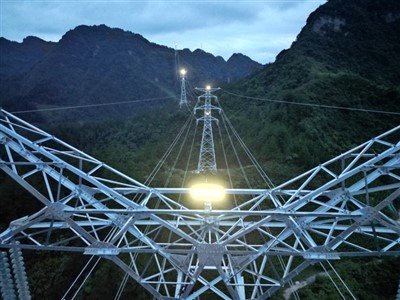
First, let’s get one key fact straight: obstruction lights aren’t just “night lights for tall structures.” Their entire purpose is to prevent mid-air collisions—with everything from small general aviation planes to commercial cargo jets, even low-flying drones, helicopters, and agricultural aircraft that operate at lower altitudes. The Federal Aviation Administration (FAA) in the U.S., the International Civil Aviation Organization (ICAO), and equivalent bodies across 190+ countries have strict rules for where these lights go, how bright they have to be, and how they behave. For example, a 500-foot telecommunications tower in a rural area has different requirements than a 1,200-foot wind farm cluster next to a busy flight corridor. We don’t just sell lights that light up; we build products that meet and exceed those global standards, because a light that fails a safety test is useless.
Let’s start with the most common types of obstruction lights, because not all are the same, and choosing the right one is critical. There are two core categories: red flashing (or steady-burning) lights for structures under 500 feet, and white high-intensity lights for anything over that threshold. Wait, you might be thinking—why red vs white? It’s all about contrast and adaptability. Red lights are designed to be visible from a distance of at least 3 nautical miles for low-altitude craft, and they don’t interfere with the natural night vision of pilots. White lights, by contrast, are for much taller structures because they can be seen from up to 10 nautical miles away, which is necessary when a plane is approaching from farther out. They also have a specific flashing pattern that’s calibrated to avoid confusion with airport runway lights or other aircraft beacons.
But here’s the part most people don’t talk about: brightness isn’t the only thing that matters. If a light is too bright, it can create glare that temporarily blinds pilots—especially when they’re flying at low altitude, trying to avoid power lines or communication towers near a busy airport. Too dim, and a pilot might miss it entirely in cloudy conditions or haze. That’s why modern obstruction lights use LED technology now, not incandescent bulbs. LEDs let us adjust brightness dynamically based on ambient light, a feature called “dimming control.” During the day, when light levels are high, the light cranks up to full intensity. At night, when it’s darker, it dims automatically to a level that’s visible but not blinding. We test this adjustment hundreds of times in our factory’s climate chambers, simulating everything from a moonless rural night to a city’s bright suburban sky, to make sure the brightness stays within the exact range required by aviation regulators.
Another key feature is flash synchronization. If you’ve ever looked at a row of wind turbines at night, you might notice their lights blink in perfect, unison rhythm. That’s not a coincidence—it’s engineered. Without synchronization, each turbine’s blinking light could look like a scattered, confusing pattern to a pilot, making it hard to tell where one structure ends and another begins. We use GPS technology in our lights to sync them automatically with other nearby obstruction lights, no extra wiring required. That’s a huge upgrade from older systems that needed complex hardwiring to sync, which was expensive and easy to disrupt if a light went offline. Today, a single GPS signal keeps a whole field of 20 wind turbines blinking in perfect lockstep, every single night.
Durability is non-negotiable too. These lights aren’t mounted on fancy indoor walls; they’re on wind turbines in remote, off-grid mountain passes, on skyscraper rooftops that get battered by salt air and rain, on communication towers in the middle of thunderstorm zones. So they have to be weatherproof, corrosion-resistant, and able to survive extreme temperatures, from -40°F in Alaska to 120°F in the Arabian Desert. We build all our lights with IP67 or IP68 ratings, which means they’re completely dust-tight and can withstand being submerged in water for up to 30 minutes (or longer for some models). We also test every light for vibration resistance, because a wind turbine’s constant spin or a tall building’s sway can shake loose parts if the light isn’t built right. Last year, we had a client in the Rockies tell us their lights had survived a 100+ mph windstorm that tore shingles off their nearby buildings—proof that our design works when it really matters.
Power source is another piece of the puzzle. Most people assume obstruction lights are hardwired to the grid, but for remote structures, that’s not always possible. A communication tower in the middle of a desert might be 50 miles from the nearest power line, so running electricity there would cost tens of thousands of dollars—more than the light itself. That’s why we make solar-powered obstruction lights, with built-in battery banks that can store enough energy to run the light for 7 straight cloudy days, no external power needed. We even add low-power mode for periods of extended cloud cover, so the light doesn’t dim to a point where it’s no longer visible, while still conserving battery life. For grid-connected sites, we offer backup battery systems that kick in instantly if there’s a power outage—no gaps in visibility, no down time, which is non-negotiable for aviation safety.
One of the most important, and often overlooked, parts of our job as obstruction light suppliers is testing and maintenance. A light is only useful if it works, right? So we don’t just ship a light and wash our hands of it. Every single unit leaves our factory with a 5-year minimum warranty, and we offer ongoing monitoring services that let clients track each light’s performance in real time. Our cloud-based system sends an alert to the client’s phone or email if a light’s brightness drops below the required level, or if a battery is running low, or if there’s a sync error. That way, a maintenance crew can replace a faulty light before it becomes a safety hazard, instead of finding out after a pilot reports a near-miss. We also do annual third-party testing to make sure our lights meet all current FAA, ICAO, and local regulations, because aviation safety standards evolve as technology and air traffic patterns change.
Let’s get personal for a second. I’ve been in this industry for 12 years, and I’ve seen what happens when an obstruction light fails. A few years ago, we got a call from a wind farm in the Midwest where a light had burned out, and the crew didn’t notice it for three months. A small crop duster pilot hit the turbine that night, totaled the plane, and barely walked away with minor injuries. That incident stuck with me—because that light wasn’t just a product we sold, it was a part of keeping that pilot safe, and it failed because the client didn’t have a way to monitor it. That’s why we built our monitoring system: no client should ever have to lose a life because they didn’t know a light was out.
Now, you might be wondering, “What if a structure is temporary? Like a construction crane or a scaffolding on a tall building?” We’ve got solutions for that too. Temporary obstruction lights are lightweight, easy to install in hours, and can be removed as soon as the construction is done. They’re built to last just long enough for the job, but still meet all aviation safety standards, so construction crews don’t have to deal with fines because their lights didn’t meet FAA rules. We’ve worked on everything from small residential construction cranes to skyscraper projects that took two years to build, and we tailor each light to the timeline of the job.

At the end of the day, obstruction lights are a quiet, uncelebrated part of aviation safety. Most people will never think about them, and most pilots will never even notice they’re there—until the day they do. For us, that’s the point: our work shouldn’t draw attention to itself, it should just work, every single night, no matter what. If you’re working on a project that needs obstruction lights—whether it’s a new skyscraper, a wind farm, a communication tower, or temporary construction structures—we’re here to help. We’ll walk you through the regulations, help you choose the right type of light for your site, and make sure everything meets all safety standards. If you’re looking for a reliable supplier that prioritizes performance and safety above all else, reach out to us to discuss your requirements. We’re here 24/7 for projects big or small.
Toolboxes References
International Civil Aviation Organization (ICAO) Annex 14, Aerodromes, Volume 1: Aerodrome Design and Operations, 2022.
Federal Aviation Administration (FAA) AC 70/7460-1L, Obstruction Marking and Lighting, 2021.
National Electrical Manufacturers Association (NEMA) LS 7-2020, Standard for Obstruction Lighting Systems for Structures.
American National Standards Institute (ANSI) S10.4-2018, Lighting for Airway Obstructions.
Wuhu Qiahao Metal Products Co., Ltd.
As one of the most professional obstruction lights manufacturers and suppliers in China, we warmly welcome you to buy premium obstruction lights made in China here from our factory. All customized products are with high quality and competitive price. Contact us for pricelist.
Address: Building 5, No. 3 Yongtai Road, Wanzhi District, Wuhu City, Anhui Province, China
E-mail: 290418907@qq.com
WebSite: https://www.qiahaometal.com/
